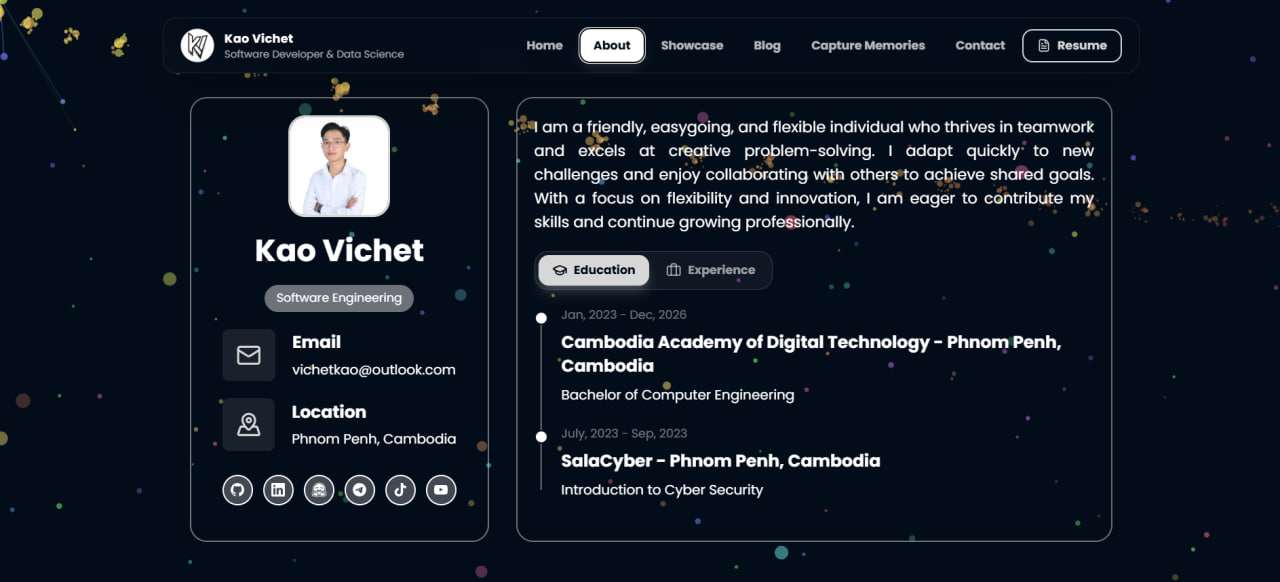
This post showcases the technical portfolio and development roadmap of Kao Vichet, a versatile software engineer specializing in full-stack applications, machine learning workflows, and computer vision pipelines.
Creating effective digital systems requires bridging the gap between robust software engineering and cutting-edge artificial intelligence. As showcased on his personal portfolio website, Kao Vichet has established a continuous trajectory of building reliable, production-ready software. By focusing on scalability and efficient algorithms, his projects demonstrate how complex technological concepts ranging from multi-segment race telemetry to quantum machine learning—can be structured into intuitive user applications.
Full-Stack and Event Management Systems
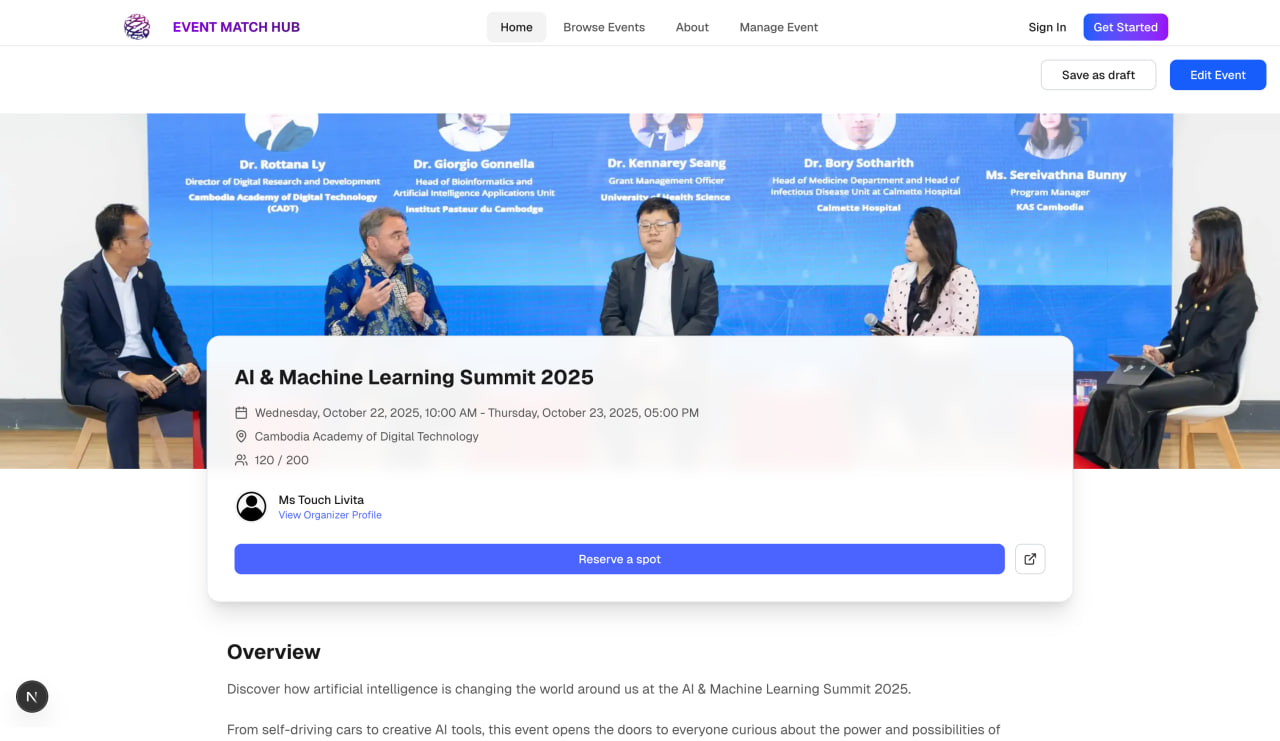
Within the realm of web and mobile applications, two notable systems highlight this full-stack versatility. The first, TriTrack, is a real-time marathon tracking platform designed to map participants across multi-segment races using smart BIB input, live leaderboard telemetry, and multi-tier manager access. The second is Event Match Hub, a comprehensive event management solution that utilizes AI recommendations, real-time chat protocols, and automated digital certificate generation to streamline administrative workflows. Both applications demonstrate a strong attention to clean code architectures and seamless data synchronization.
Pushing Boundaries with Document Intelligence and Handwriting OCR
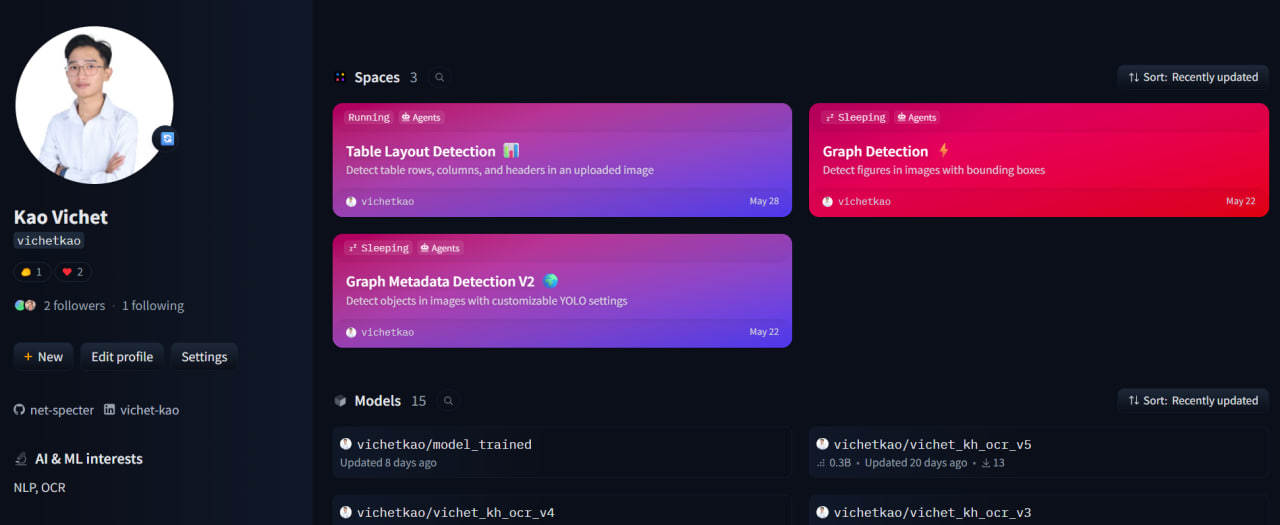
Beyond standard application development, much of his current engineering focus centers on complex document digitization and layout extraction pipelines. This includes developing custom YOLO models for graph and table parsing, as well as compiling the massive wild_khmer dataset for visual grounding. This research culminated in the release of vichet_kh_ocr_v4 on Hugging Face, a specialized 0.3-billion parameter vision-encoder-decoder model designed to process and classify complex, low-resource Khmer handwritten scripts for intelligent routing to downstream processing engines.
Exploring Quantum Machine Learning for Biometrics
Rounding out his portfolio is a deep-tech comparative study titled Face Recognition: Quantum vs Machine Learning. This project investigates the capabilities of hybrid quantum-classical neural networks using PennyLane and PyTorch, benchmarking them against standard deep learning architectures like ResNet. The research focuses on how quantum-enhanced Hilbert spaces map fine facial textures and bone geometry to detect synthetic deepfakes, illustrating the practical boundaries and security potentials of Quantum AI in near-term biometrics.