Struggling to digitize complex, mixed-media documents? This novel, resource-efficient OCR pipeline uses a lightweight AI classifier to instantly separate printed and handwritten Khmer text before reading it, making automated document processing practical for low-resource environments.
Tackling the Mixed-Media OCR Challenge
As Cambodia digitizes its civil records, documents like birth certificates present a unique hurdle: they combine standardized printed templates with unpredictable handwritten Khmer entries. Standard OCR engines struggle to read both text types at once, and training massive, end-to-end AI models is too computationally expensive for low-resource environments.
A "Classification-First" Solution
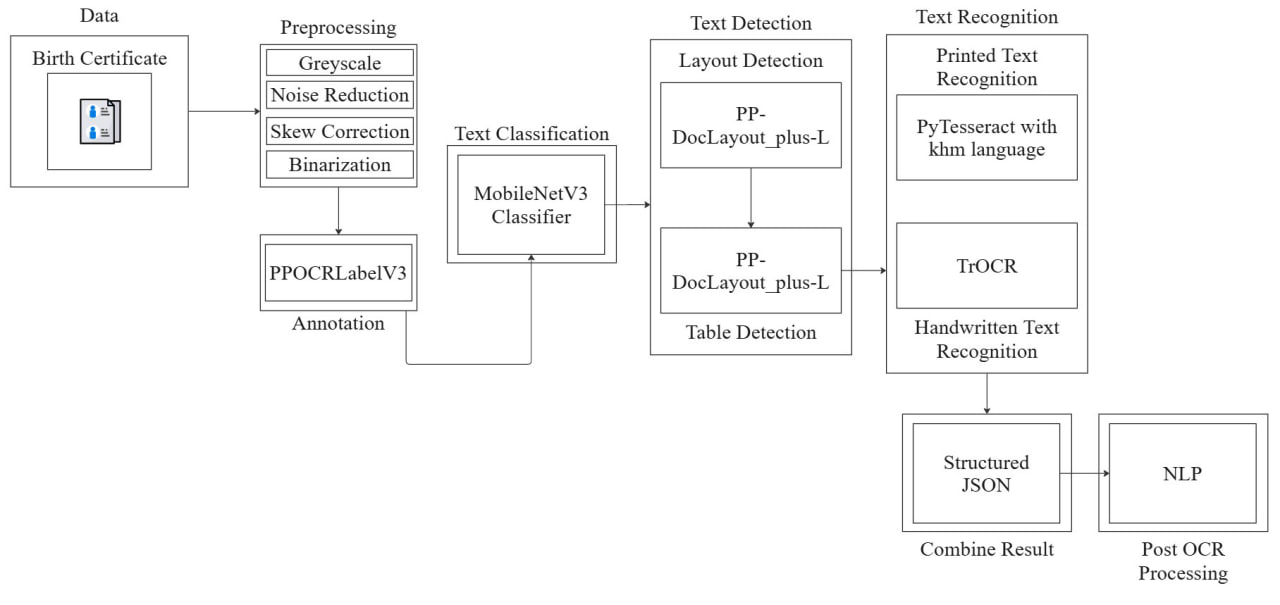
Instead of relying on one heavy AI model, the researchers built a smart, modular pipeline. After automatically cleaning the scanned image and detecting where the text is, the system uses a lightweight custom classifier (MobileNetV3). This classifier's only job is to instantly sort every text snippet into "Printed" or "Handwritten" categories. Printed text is then routed to standard OCR (Tesseract) for transcription, while handwritten text is isolated for specialized processing.
High Accuracy and Real-World Potential
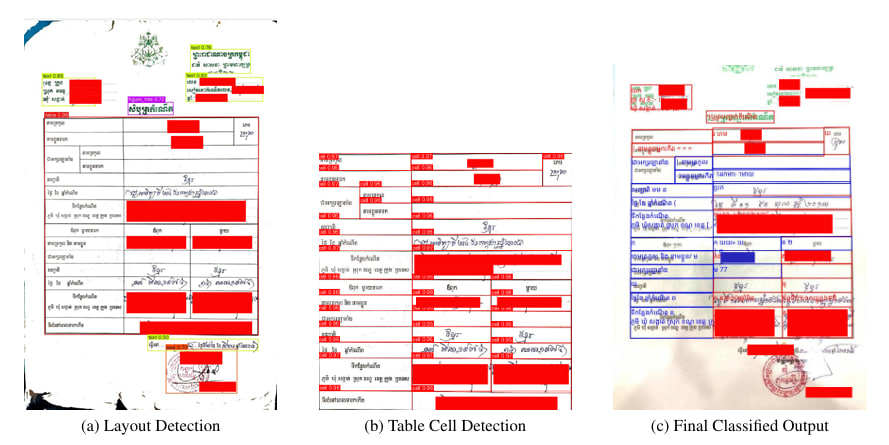
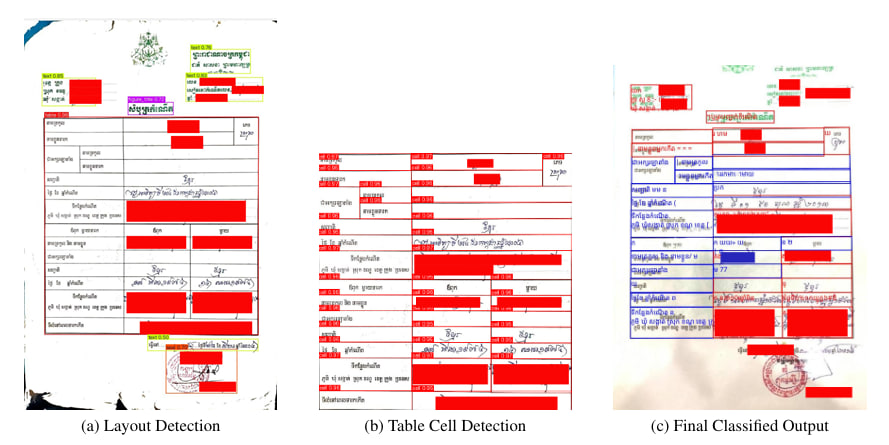
This classification-first method proved highly effective, achieving 99.1% accuracy in sorting curated text snippets. When applied to a full, real-world birth certificate, the system successfully mapped out the document and accurately color-coded the printed templates versus the handwritten entries. This modular approach proves that you don't need expensive computing power to process complex official records.